About 77 minutes
The World English Bible (WEB): Proverbs — Story, Setting & Ideas
Theology
17,598 recorded words. 1 minutes difference from this book's estimate.
View Gutenberg source #8247
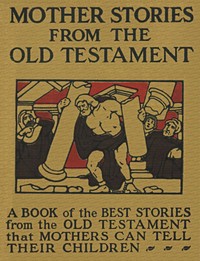
The source record for Mother Stories from the Old Testament A Book of the Best Stories from the Old Testament that Mothers can tell their Children — Reading Companion measures this digital text at 17,318 words, 1 hr 16 min estimated reading time, and 4 detected text sections.
The text analysis averages about 19.9 words per sentence, while the detected sections provide another way to judge how the source is divided.
Project Gutenberg metadata also associates the work with “Bible stories, English,” connecting these edition facts with the source record’s subject description.
Explore this collection
These alternatives are selected using recorded categories and estimated reading time.
About 77 minutes
Theology
17,598 recorded words. 1 minutes difference from this book's estimate.
View Gutenberg source #8247About 77 minutes
Theology
17,610 recorded words. 1 minutes difference from this book's estimate.
View Gutenberg source #17163About 80 minutes
Theology
18,370 recorded words. 4 minutes difference from this book's estimate.
View Gutenberg source #8829Search stored excerpts and compare books → Choose by your preferences →
Choices use stored catalog measurements. Estimates vary with reading speed. A shared category is a catalog label, not a claim that two books have the same argument or literary quality.
Search reads excerpt text stored with this catalog and links to its associated Gutenberg record. The connection is stored in the site database; this tool does not recheck that every excerpt is word-for-word identical to that external record. Excerpt search does not cover every chapter and does not verify historical publication dates.
Catalog snapshot checked: 2026-09-26. Coverage: 96 public books, 96 available source excerpts.
Calculated from edition completeness, EPUB availability, text structure and catalogue metadata. Not a user rating.
Total of 100 points, scaled to a 2.5-5.0 range. Editions with an empty description or a missing EPUB file are not scored.
Public-domain source text
The source text is kept in the dedicated reader, separate from this catalogue record and its commentary.
The anonymous author of Mother Stories from the Old Testament adopts a direct, conversational voice throughout, addressing the child listener as “you” and framing each story with moral clarity. The narrative often pauses to insert interpretive remarks—such as “Was not this a terrible end to what might have been a noble life?” after Samson’s death—revealing a didactic purpose that shapes the pacing. The retelling of Ruth and Naomi, for instance, quotes Ruth’s famous declaration verbatim (“Whither thou goest, I will go”) but then immediately summarizes the outcome, compressing the emotional arc into a swift moral lesson. This editorial note examines how the author’s language, narrative voice, and shifts in pace work together to transform biblical episodes into accessible, lesson-driven tales for young audiences.
The narrator speaks as a knowledgeable adult guiding a child through the stories. In “Adam and Eve,” the sentence “Both were placed in a beautiful garden called the Garden of Eden, where they might have been happy continually had they not sinned” uses the conditional “might have been” to introduce the concept of sin as a turning point. The voice frequently adds evaluative phrases: after Samson’s death, the narrator asks, “Was not this a terrible end to what might have been a noble life?” This rhetorical question invites the child to judge the character’s choices. Similarly, in “Boaz and Ruth,” the narrator concludes by stating “what high honour was bestowed upon Ruth for her kindness to her mother-in-law,” explicitly linking action to reward. The voice thus functions as a moral commentator, not merely a storyteller.
The author manipulates pace by compressing lengthy biblical narratives into a few paragraphs while expanding key moral moments. In “Ruth and Naomi,” the entire journey from Moab to Bethlehem is covered in two sentences: “Then Naomi determined to return to her own land. Orpah and Ruth accompanied Naomi some distance on her journey.” Yet Ruth’s speech is quoted in full, slowing the pace to emphasize her loyalty. Conversely, in “Joseph Sold into Captivity,” the story is condensed into a single page, with no dialogue and rapid movement from Joseph’s sale to his rise in Egypt. The effect is a rhythm that lingers on virtuous declarations and rushes past complex events, reinforcing the book’s moral framework.
Each story follows a predictable arc: introduction of characters, a problem or test, a resolution, and a concluding moral. The narrator often signals the moral with phrases like “so we see” or “was not this.” For example, after Ruth marries Boaz, the text notes that “Jesus Christ descended from David; so we see what high honour was bestowed upon Ruth.” This pattern recurs in “The Death of Samson,” where the final question serves as the moral. The stories also share a consistent sentence structure—short, declarative sentences with frequent use of “then” and “so”—that creates a steady, oral rhythm suitable for reading aloud. The repetition of this structure across tales reinforces the book’s identity as a collection of teachable moments rather than a continuous narrative.
Readers may notice how the anonymous author’s choices—the moralizing asides, the uneven pacing, and the formulaic structure—work together to transform the Old Testament into a series of clear lessons for children. The book rewards attention to these patterns, revealing a deliberate craft aimed at shaping young listeners’ understanding of virtue and consequence. Approaching it as a document of early twentieth-century didactic literature, rather than as a biblical reference, opens up its historical and pedagogical significance.
The rain kept time with the slow cadence of Mother Stories from the Old Testament, its plain retellings soothing as a hand on a fretful child’s brow. That quiet, direct voice stayed with me long after I closed it. Later, the same patient tone surfaced unexpectedly in The Gospel of St. John — Reading Notes, and the afternoon felt oddly complete, like one story opening naturally into the next.
Use these questions to collect your thoughts before moving on.