About 77 minutes
The World English Bible (WEB): Proverbs — Story, Setting & Ideas
Theology
17,598 recorded words. 0 minutes difference from this book's estimate.
View Gutenberg source #8247
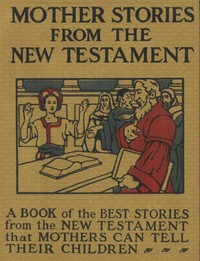
For Mother Stories from the New Testament A Book of the Best Stories from the New Testament that Mothers can tell their Children — Edition Insights, the stored edition analysis reports 17,610 words, 1 hr 17 min estimated reading time, and 4 detected text sections.
The text analysis averages about 20.8 words per sentence, while the detected sections provide another way to judge how the source is divided.
Project Gutenberg metadata also associates the work with “Bible stories, English,” connecting these edition facts with the source record’s subject description.
Explore this collection
These alternatives are selected using recorded categories and estimated reading time.
About 77 minutes
Theology
17,598 recorded words. 0 minutes difference from this book's estimate.
View Gutenberg source #8247About 76 minutes
Theology
17,318 recorded words. 1 minutes difference from this book's estimate.
View Gutenberg source #17162About 80 minutes
Theology
18,370 recorded words. 3 minutes difference from this book's estimate.
View Gutenberg source #8829Search stored excerpts and compare books → Choose by your preferences →
Choices use stored catalog measurements. Estimates vary with reading speed. A shared category is a catalog label, not a claim that two books have the same argument or literary quality.
Search reads excerpt text stored with this catalog and links to its associated Gutenberg record. The connection is stored in the site database; this tool does not recheck that every excerpt is word-for-word identical to that external record. Excerpt search does not cover every chapter and does not verify historical publication dates.
Catalog snapshot checked: 2026-09-26. Coverage: 96 public books, 96 available source excerpts.
Calculated from edition completeness, EPUB availability, text structure and catalogue metadata. Not a user rating.
Total of 100 points, scaled to a 2.5-5.0 range. Editions with an empty description or a missing EPUB file are not scored.
Public-domain source text
The source text is kept in the dedicated reader, separate from this catalogue record and its commentary.
The anonymous author of Mother Stories from the New Testament immediately establishes a dual audience: the mother who will tell the stories and the child who will hear them. The title page declares the book is for mothers to tell their children, and the opening story, “The Wise Men’s Visit,” begins with a direct statement: “The birth of Jesus Christ was announced by two remarkable events.” This plain, declarative style persists throughout, avoiding complex theology in favor of clear narrative. The author often inserts explanatory asides, such as noting that wise men “were probably astronomers,” which signals a pedagogical intent to clarify unfamiliar terms for young listeners.
The author’s voice is consistently instructive and affectionate. In “The Good Shepherd,” the text shifts from parable to direct address: “Now, why does Jesus call Himself the ‘good shepherd’… Is it not because He loves us?” This rhetorical question invites the mother-reader to pause and engage the child. The author also uses inclusive language like “we” and “us,” as in “May we seek to follow Him,” creating a shared devotional moment. The maternal framing is reinforced by the book’s series title, “Altemus’ Mother Stories,” which positions the mother as the primary interpreter. The author does not merely retell Bible stories but models how a mother might explain them, often ending with a moral application, such as “Are we giving Him our love now?”
The excerpts show a careful selection of parables that lend themselves to simple moral lessons. “The Unmerciful Servant” concludes with the Lord’s Prayer phrase “Forgive us our trespasses, as we forgive them that trespass against us,” directly linking the story to a familiar prayer. Similarly, “The Lost Piece of Money” emphasizes the joy of repentance, with the author repeating Jesus’ words: “Likewise, I say unto you, there is joy in the presence of God’s angels over one sinner that repenteth.” The author often adds a brief explanation after the parable, as in “The Good Shepherd,” where the metaphor is unpacked: “He gave His life for us when He died on the cross.” This pattern—story, explanation, application—makes the parables accessible without theological complexity.
Each story follows a consistent structure: a heading, a brief narrative, and often a concluding moral or question. The headings are simple, such as “The Wise Men’s Visit” or “The Prodigal Son,” and the text rarely exceeds a few paragraphs. The author frequently repeats key phrases from the biblical text, such as “the good shepherd giveth his life for the sheep,” reinforcing the message. The stories are self-contained, allowing a mother to read one aloud in a single sitting. The table of contents lists 48 stories, suggesting a deliberate pacing. The repetition of structure and language creates a predictable rhythm that aids comprehension for young listeners.
The book includes “forty-five illustrations,” though the excerpts do not describe them. However, the text occasionally references the pictures, as in “like the kind shepherd is doing in our picture” from “The Good Shepherd.” This indicates that the illustrations are integral to the reading experience, providing visual anchors for the stories. The author likely expected mothers to point to the images while telling the story. The captions, such as “THE SHEPHERD AND THE LAMBS,” further connect text and image. The illustrations would have been especially important for children who could not yet read, making the book a shared visual and verbal experience.
Reading these excerpts sequentially reveals a deliberate pedagogical design: the anonymous author prioritizes clarity, repetition, and moral application over narrative embellishment. The stories are not mere retellings but tools for religious instruction, carefully framed for a mother’s voice. A first-time reader should note how the author balances fidelity to the biblical text with explanatory additions, and how the illustrations likely complement the verbal narrative. This book is best approached as a script for oral performance, where the mother’s tone and pacing bring the stories to life.
There’s a particular hush in those morning readings, the way the parables feel less like lessons and more like quiet windows. I found that same unhurried wondering again in Studies in Prophecy — A Closer Reading, though it reads like a candle lit in a different room. Both feel like old friends speaking softly, asking nothing of me.
Capture what you thought, learned, and would like to remember.