About 243 minutes
Studies in Zechariah — Reading Companion
Theology
55,847 recorded words. 2 minutes difference from this book's estimate.
View Gutenberg source #36216
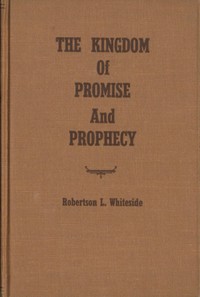
The source record for The Kingdom of Promise and Prophecy — Story, Setting & Ideas measures this digital text at 55,245 words, 4 hr 1 min estimated reading time, and 8 detected text sections.
The text analysis averages about 19.3 words per sentence, while the detected sections provide another way to judge how the source is divided.
Project Gutenberg metadata also associates the work with “Bible -- Prophecies,” connecting these edition facts with the source record’s subject description.
Explore this collection
These alternatives are selected using recorded categories and estimated reading time.
About 243 minutes
Theology
55,847 recorded words. 2 minutes difference from this book's estimate.
View Gutenberg source #36216About 236 minutes
Theology
54,254 recorded words. 5 minutes difference from this book's estimate.
View Gutenberg source #72047About 232 minutes
Theology
53,195 recorded words. 9 minutes difference from this book's estimate.
View Gutenberg source #25221Search stored excerpts and compare books → Choose by your preferences →
Choices use stored catalog measurements. Estimates vary with reading speed. A shared category is a catalog label, not a claim that two books have the same argument or literary quality.
Search reads excerpt text stored with this catalog and links to its associated Gutenberg record. The connection is stored in the site database; this tool does not recheck that every excerpt is word-for-word identical to that external record. Excerpt search does not cover every chapter and does not verify historical publication dates.
Catalog snapshot checked: 2026-09-26. Coverage: 96 public books, 96 available source excerpts.
Calculated from edition completeness, EPUB availability, text structure and catalogue metadata. Not a user rating.
Total of 100 points, scaled to a 2.5-5.0 range. Editions with an empty description or a missing EPUB file are not scored.
Public-domain source text
The source text is kept in the dedicated reader, separate from this catalogue record and its commentary.
Robertson L. Whiteside opens with a direct challenge to those who anticipate a literal, earthly kingdom for ethnic Israel. He argues that the Jewish nation, having rejected Christ, was broken off from God’s favor, and that the kingdom was transferred to believers—Jew and Gentile alike—who now constitute the true heirs of Abraham. The tone is confrontational, targeting what he calls “future-kingdom advocates” and naming figures like John R. Rice. Whiteside’s method is to cite Scripture (Matthew 21:43, Romans 11:20, Galatians 3:29) and then press his interpretation as the only consistent one. Readers should expect a sustained polemic rather than a neutral survey.
The table of contents reveals the book’s combative structure. Part I is titled “Questions” and includes entries such as “Will Jews Return to Jerusalem?” and “The Olive Tree Figure of Romans 11.” Part II, “Discussions,” contains headings like “Future Kingdom Doctrine Reflects on Integrity of God” and “A Leading Doctrine of This Current Reformation.” Whiteside is not explaining prophecy in the abstract; he is refuting specific positions. The repeated phrase “future-kingdom advocates” functions as a label for his opponents, whom he engages by name (e.g., Mr. Rice). This is a work of theological controversy, written for readers already familiar with the debate.
Whiteside leans heavily on Paul’s allegory in Galatians 4:21-31, where Hagar and Sarah represent two covenants. He concludes that “the handmaid and her son were cast out” and that the Jewish nation “shall not inherit with the son of the freewoman.” This allegorical reading is central to his case: the Old Testament promises to Israel are now fulfilled in the church. He also invokes Matthew 12:43-45 to argue that the last state of that race will be worse than the first, directly contradicting the idea of a future golden age for ethnic Israel. The excerpts show a writer who treats typology and allegory as decisive interpretive tools.
A key point of contention is the nature of Christ’s reign. Whiteside quotes an opponent who says Jesus will descend from the Father’s throne to sit on David’s throne, and he scoffs: “Exalted to a lower place!” He then argues that David’s throne and Jehovah’s throne are the same, citing 1 Chronicles 29:23 where Solomon sat on “the throne of Jehovah” as king. This move collapses the distinction between a future earthly kingdom and Christ’s current heavenly rule. The reader should note how Whiteside uses a single verse to redefine a term—here, “throne”—and thereby undercut an entire eschatological system.
The book was compiled posthumously by Whiteside’s daughter, Inys Whiteside, who gathered materials from religious journals and manuscripts. She states her hope that this volume, along with two others, will “fill the present need for sound and careful Bible teaching.” This editorial context matters: the chapters were originally separate articles, not a unified monograph. Readers may notice some repetition or shifts in tone between sections. The preface also thanks the managements of the Gospel Advocate, Gospel Guardian, and Firm Foundation, situating the work within a specific network of conservative Churches of Christ.
Whiteside’s book is best approached as a series of arguments rather than a systematic theology. Because the excerpts are drawn from the opening polemic, they emphasize his negative case against future-kingdom views. The later sections, such as “The New Testament Word Flesh” and “Resurrection From the Dead,” may develop more constructive positions. Readers should track how Whiteside handles key proof texts (e.g., Romans 11:26, “all Israel shall be saved”) to see whether his exegesis remains consistent throughout the volume.
Reading The Kingdom of Promise and Prophecy, I kept circling back to its quiet insistence that prophecy finds its home in present love, not distant triumph. That same tender focus surfaced uninvited when I opened Love to the Uttermost Expositions of John XIII.-XXI. — Reading Companion. The first argues where God’s promises settle; the second lingers on how He washes feet. Both, in their own unhurried way, convinced me that the kingdom was never about thrones—only about reaching low.
Your answers remain private and are stored only in this browser.